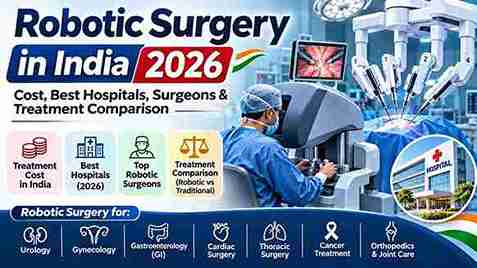
Robotic surgery is transforming modern healthcare in India by helping surgeons perform complex operations through minimally invasive techniques. From prostate and kidney cancer surgery to hysterectomy, colorectal procedures, cardiac operations and joint replacement, robotic-assisted technology is increasingly available at major private and government hospitals.
India has become an important destination for robotic surgery because patients can access advanced surgical technology, experienced specialists and multidisciplinary hospital facilities at costs that are often lower than those in the United States and Europe.
However, robotic surgery is not automatically better than conventional or laparoscopic surgery for every patient. The outcome depends on the medical condition, procedure, surgeon’s experience, hospital facilities and appropriate patient selection.
This guide explains robotic surgery costs in India in 2026, compares leading hospitals, highlights selected robotic surgeons, discusses available technologies and explains how patients can choose the right treatment.
What Is Robotic Surgery and How Does It Work?
Robotic surgery is a type of minimally invasive surgery in which a trained surgeon controls specialised robotic instruments from a console.
The robotic system does not operate independently or make surgical decisions. The surgeon controls the instruments throughout the procedure.
A commonly used system is the da Vinci Surgical System, developed by Intuitive Surgical. It typically includes:
- A surgeon console with hand and foot controls.
- A patient-side cart holding robotic arms and surgical instruments.
- A high-definition vision system that provides an enhanced view of the surgical area.
- Specialised instruments designed for precise movements inside the body.
Other systems, including India’s SSI Mantra platform, are also being used in hospitals.
How robotic surgery is performed
The surgeon makes small incisions and inserts specialised instruments and a camera. The instruments are connected to robotic arms, which respond to the surgeon’s movements.
The surgeon watches the operating area on a monitor and controls the instruments during the operation.
Depending on the procedure, robotic assistance may provide:
- Magnified three-dimensional visualisation.
- Greater instrument articulation.
- Improved access to difficult anatomical areas.
- More controlled surgical movements.
- Minimally invasive access through smaller incisions.
Robotic surgery is particularly useful in selected procedures involving complex anatomy, such as prostate surgery, pelvic surgery and certain cancer operations.
Robotic Surgery Cost in India 2026
The cost of robotic surgery in India depends on the type of operation, hospital, city, surgeon, robotic platform, room category and medical complexity.
A routine robotic procedure may cost considerably less than a complex cancer operation or robotic cardiac surgery.
For initial budgeting, patients can consider the following indicative private-hospital price ranges.
Procedure-wise robotic surgery cost
| Robotic surgery procedure | Estimated cost in India |
|---|---|
| Robotic hernia repair | ₹1.5 lakh–₹3 lakh |
| Robotic hysterectomy | ₹1.5 lakh–₹3.5 lakh |
| Robotic prostate surgery | ₹2 lakh–₹6.5 lakh |
| Robotic kidney surgery | ₹3 lakh–₹6.5 lakh |
| Robotic colorectal surgery | ₹2 lakh–₹6.5 lakh |
| Robotic bariatric surgery | ₹3.5 lakh–₹6 lakh |
| Robotic knee replacement | ₹2.5 lakh–₹5.5 lakh per knee |
| Robotic cardiac surgery | ₹5 lakh–₹12 lakh+ |
These are indicative planning estimates compiled from published healthcare cost references, not guaranteed hospital package rates. Complex cases, premium hospitals and specialised procedures can cost more.
City-wise robotic surgery cost comparison
| City | Indicative overall robotic surgery budget |
|---|---|
| Delhi NCR | ₹2 lakh–₹5.5 lakh |
| Mumbai | ₹2 lakh–₹5.5 lakh |
| Bengaluru | ₹1.8 lakh–₹5 lakh |
| Chennai | ₹1.7 lakh–₹5 lakh |
| Hyderabad | ₹1.8 lakh–₹5 lakh |
| Pune | ₹1.7 lakh–₹4.5 lakh |
| Kolkata | ₹1.7 lakh–₹4.5 lakh |
| Lucknow | ₹1.2 lakh–₹4 lakh |
City ranges are broad planning estimates, not verified average prices for every procedure. Actual quotations can differ substantially between hospitals in the same city.
What is included in a robotic surgery package?
A hospital quotation may include:
- Surgeon and assistant surgeon fees.
- Robotic system usage charges.
- Operation theatre charges.
- Anaesthesia fees.
- Surgical instruments and consumables.
- Hospital room and nursing charges.
- Standard medicines and investigations.
- Routine post-operative care.
Some packages exclude specialised implants, blood products, additional investigations, extended ICU stays, complications and rehabilitation.
Always request a written estimate showing inclusions and exclusions before admission.
Best Hospitals for Robotic Surgery in India 2026
India has several major hospital networks with established robotic surgery programmes. The following hospitals are worth considering based on their published robotic facilities, specialist departments and treatment experience.
1. Apollo Hospitals – Advanced Robotic Surgery Across Multiple Specialties
Apollo Hospitals is one of India’s established providers of robotic-assisted surgery. Its robotic programmes cover several disciplines, including urology, gynaecology, surgical oncology, gastrointestinal surgery, bariatrics and selected cardiac procedures.
Apollo operates robotic surgery facilities across multiple cities, including Chennai, Delhi, Bengaluru and Hyderabad.
Key robotic surgery specialities:
- Robotic prostatectomy.
- Robotic kidney surgery.
- Robotic hysterectomy.
- Robotic colorectal surgery.
- Robotic cancer surgery.
- Selected robotic cardiac procedures.
- Robotic-assisted bariatric surgery.
Technology: da Vinci robotic systems and specialised robotic platforms for selected procedures.
A notable development in 2026 was Apollo Hospitals Bannerghatta Road, Bengaluru, introducing the da Vinci 5 robotic surgical system in October. The hospital announced its use across cardiac surgery, surgical oncology, gynaecology, gastrointestinal surgery and urology.
Why consider Apollo?
Apollo is worth comparing for patients seeking multidisciplinary robotic surgery, international patient support and access to several specialist departments.
Official website: https://www.apollohospitals.com/
2. Medanta – The Medicity, Gurugram
Medanta is a major multispecialty hospital known for its surgical programmes and specialist-led treatment.
Its robotic surgery services cover urology, gynaecology, general surgery and other selected disciplines.
The hospital is particularly relevant for patients seeking robotic treatment for prostate cancer, kidney tumours, bladder cancer and complex abdominal conditions.
Major robotic surgery specialities:
- Robotic prostatectomy.
- Robotic partial nephrectomy.
- Robotic cystectomy.
- Robotic gynaecological surgery.
- Robotic gastrointestinal procedures.
- Robotic abdominal surgery.
Selected robotic surgeons:
- Dr. Gagan Gautam – Uro-oncology and robotic urological surgery.
- Dr. Sachin Anand – Uro-oncology and robotic surgery.
- Dr. Dimple K. Ahluwalia – Gynaecological oncology and robotic surgery.
- Dr. Sudhir Sharma – Robotics, minimally invasive and general surgery.
These are examples of specialists listed by Medanta, not a ranking. Confirm the doctor’s current hospital location and availability before arranging a consultation.
Why consider Medanta?
It is a potential choice for patients who need complex urological cancer surgery, gynaecological oncology or multidisciplinary surgical care.
Official website: https://www.medanta.org/
3. Fortis Memorial Research Institute – Gurugram
Fortis Memorial Research Institute (FMRI) is one of the major private hospitals in Gurugram offering robotic-assisted surgical services.
Its robotic surgery programme includes urology, gynaecological oncology, surgical oncology, general surgery and selected transplant procedures.
Major robotic surgery services:
- Robotic prostate surgery.
- Robotic kidney surgery.
- Robotic cancer operations.
- Robotic gynaecological surgery.
- Robotic-assisted kidney transplantation.
- Selected gastrointestinal procedures.
Selected specialists:
- Dr. Rama Joshi – Chairman, Gynaecological Oncology and Robotic Surgery.
- Dr. Anil Mandhani – Chairman, Urology.
- Dr. Vikram Sharma – Urology.
Patients should confirm the exact procedure offered by each specialist and ask about their experience with the relevant robotic operation.
Why consider Fortis FMRI?
It is worth comparing for patients seeking robotic urological surgery, cancer surgery and specialist-led multidisciplinary care.
Official website: https://www.fortishealthcare.com/
4. Fortis Hospital, Mohali – High-Volume Robotic Surgery Programme
Fortis Hospital Mohali is an important robotic surgery centre in North India.
The hospital reports operating two da Vinci Xi robotic systems and providing robotic procedures across gynaecology, urology, surgical oncology, ENT and head-and-neck surgery, general and gastrointestinal surgery, breast and endocrine surgery, and kidney transplantation.
According to the hospital’s published 2026 information, its robotic programme completed more than 1,200 da Vinci procedures in 2025 and had a team of 17 internationally trained robotic surgeons.
Major specialities:
- Robotic urology.
- Robotic gynaecology.
- Robotic cancer surgery.
- Robotic kidney transplantation.
- Robotic gastrointestinal surgery.
- ENT and head-and-neck surgery.
Why consider Fortis Mohali?
Patients from Punjab, Haryana, Himachal Pradesh, Jammu and Kashmir and other North Indian states may find it a useful option for comparing robotic surgery programmes.
Official website: https://www.fortishealthcare.com/
5. Kokilaben Dhirubhai Ambani Hospital – Mumbai
Kokilaben Dhirubhai Ambani Hospital in Mumbai has an established Centre for Robotic Surgery.
The hospital reports using the da Vinci Xi system and has also announced the introduction of the Toumai robotic surgery system.
Its robotic programme covers selected urological, gynaecological, gastrointestinal and cancer procedures.
Major robotic surgery specialities:
- Uro-oncology.
- Robotic prostate surgery.
- Kidney and bladder cancer surgery.
- Gynaecological surgery.
- Gastrointestinal surgery.
- General and minimally invasive surgery.
Selected robotic surgeons:
- Dr. Yuvaraja T. B. – Uro-oncology and robotic surgery.
- Dr. Akash Shah – Genitourinary surgery, robotic surgery and uro-oncology.
Why consider Kokilaben Hospital?
It is an option for patients seeking robotic urological cancer treatment and advanced minimally invasive surgery in Mumbai.
Official website: https://www.kokilabenhospital.com/
6. Manipal Hospitals – Robotic Surgery Across Multiple Cities
Manipal Hospitals offers robotic-assisted surgery across several locations in India.
Its services include robotic orthopaedics, spine surgery, surgical oncology, gastrointestinal surgery and other selected procedures.
Selected specialists listed by Manipal:
- Dr. Rajeev Verma – Orthopaedics, robotic surgery and sports injuries.
- Dr. S. Vidyadhara – Spine surgery and robotic spine surgery.
- Dr. Shabber Zaveri – Surgical oncology and robotic surgery.
- Dr. Surender Kumar Dabas – Surgical oncology and robotic procedures.
- Dr. Yugal Kishore Mishra – Cardiac surgery.
- Prof. Dr. Sandeep Aggarwal – Minimal access, bariatric, gastrointestinal and robotic surgery.
The exact robotic procedure and technology available depend on the hospital location and specialist team.
Why consider Manipal Hospitals?
Its network offers patients multiple locations to compare, particularly for orthopaedic, spine, cancer and gastrointestinal surgery.
Official website: https://www.manipalhospitals.com/
7. Fortis Hospital Bannerghatta Road – Bengaluru
Fortis Hospital Bannerghatta Road has developed a major robotic surgery programme in Bengaluru.
In August 2026, the hospital announced that it had completed 3,000 da Vinci Xi robotic surgeries, making it one of the prominent high-volume programmes in the country.
The hospital reported using two da Vinci Xi systems and offering robotic procedures across 12 specialties.
Major areas of robotic treatment:
- Urology.
- Kidney transplantation.
- Gynaecology.
- Surgical oncology.
- Gastrointestinal surgery.
- Bariatric surgery.
- Cardiac surgery.
- ENT.
Why consider this hospital?
It is worth comparing for patients seeking robotic cancer surgery, urological procedures, kidney transplantation and other advanced minimally invasive operations in Bengaluru.
Official website: https://www.fortishealthcare.com/
8. KGMU Lucknow – Government Hospital Robotic Surgery
King George’s Medical University (KGMU), Lucknow, is an important government-sector option for patients looking for advanced surgical care at potentially lower costs.
In February 2026, reports stated that KGMU had introduced a da Vinci robotic system alongside its existing SSI Mantra robotic platforms.
A robotic-assisted gallbladder removal procedure was reported at approximately ₹70,000, compared with around ₹1.5 lakh or more at some private hospitals.
This was a reported individual procedure cost, not a universal price for robotic surgery at KGMU.
Why consider KGMU?
Patients may find it useful to enquire about eligibility, available robotic systems, waiting periods, procedure availability and the cost of specific operations.
Official website: https://www.kgmu.org/
9. Homi Bhabha Cancer Hospital and Research Centre, New Chandigarh
Homi Bhabha Cancer Hospital and Research Centre is part of Tata Memorial Centre under the Department of Atomic Energy, Government of India.
It is an important option for patients requiring cancer-related surgical care.
In July 2026, the Press Information Bureau reported that the hospital had completed more than 100 robotic cancer surgeries in less than six months, with robotic surgery provided at no additional cost to patients under its reported programme.
Eligibility and the current availability of this arrangement must be confirmed directly with the hospital.
Why consider this hospital?
It may be particularly relevant for eligible patients seeking cancer surgery through a government-supported specialist cancer centre.
Official website: https://hbchrcm.tmc.gov.in/
Best Robotic Surgeons in India: Specialists to Compare
Choosing an experienced robotic surgeon is often more important than selecting a hospital simply because it has an advanced robotic system.
The following doctors are examples of specialists whose hospital profiles identify experience in robotic surgery.
| Doctor | Hospital / Network | Area of expertise |
|---|---|---|
| Dr. Gagan Gautam | Medanta | Robotic uro-oncology |
| Dr. Dimple K. Ahluwalia | Medanta | Robotic gynaecological oncology |
| Dr. Sachin Anand | Medanta | Robotic urological oncology |
| Dr. Rama Joshi | Fortis FMRI | Gynaecological oncology and robotic surgery |
| Dr. Anil Mandhani | Fortis FMRI | Urology |
| Dr. Yuvaraja T. B. | Kokilaben Hospital | Robotic uro-oncology |
| Dr. Akash Shah | Kokilaben Hospital | Robotic surgery and uro-oncology |
| Dr. S. Vidyadhara | Manipal Hospitals | Robotic spine surgery |
| Dr. Shabber Zaveri | Manipal Hospitals | Surgical oncology and robotic surgery |
| Dr. Sandeep Aggarwal | Manipal Hospitals | Gastrointestinal and robotic surgery |
This is a selection of publicly listed specialists, not a national ranking of the best surgeons. The appropriate surgeon depends on the specific disease and operation.
Types of Robotic Surgery Available in India
Robotic technology is used in several surgical disciplines. The following are some of the major applications.
1. Robotic Prostate Surgery
Robotic-assisted radical prostatectomy is used for selected patients with prostate cancer.
The surgeon removes the prostate gland and, where clinically appropriate, nearby tissues and lymph nodes.
Potential advantages include magnified visualisation and the ability to perform delicate movements around nerves and surrounding structures.
The main considerations include cancer control, urinary continence, erectile function and the surgeon’s experience.
2. Robotic Kidney Surgery
Robotic kidney procedures may be used for selected kidney tumours and other conditions.
Examples include:
- Robotic partial nephrectomy.
- Robotic radical nephrectomy.
- Selected reconstructive kidney procedures.
- Robotic-assisted surgery for certain urinary tract conditions.
Partial nephrectomy aims to remove a kidney tumour while preserving as much healthy kidney tissue as possible, when appropriate.
3. Robotic Hysterectomy
Robotic hysterectomy involves removal of the uterus using robotic-assisted minimally invasive techniques.
It may be considered for selected cases involving:
- Uterine fibroids.
- Abnormal uterine bleeding.
- Endometriosis.
- Certain gynaecological cancers.
- Other conditions requiring hysterectomy.
Not every patient requires robotic surgery. Conventional laparoscopic or vaginal surgery may be equally appropriate or preferable in some cases.
4. Robotic Colorectal Surgery
Robotic colorectal procedures can be used in selected patients with colorectal cancer and other intestinal conditions.
The technology may help surgeons work in confined anatomical areas, especially during certain pelvic operations.
5. Robotic Hernia Surgery
Robotic-assisted hernia repair may be considered for selected abdominal wall and inguinal hernias.
The surgical approach depends on the type of hernia, its size, previous operations and the patient’s medical condition.
6. Robotic Cardiac Surgery
Robotic cardiac procedures may be used in selected cases involving mitral valve surgery and certain coronary or other cardiac operations.
These procedures require specialised cardiac surgical teams and appropriate hospital infrastructure.
7. Robotic Orthopaedic Surgery
Robotic assistance is also used in selected joint replacement procedures, particularly knee and hip surgery.
Systems such as MAKO and CUVIS help surgeons plan and execute selected bone preparation and implant positioning tasks.
It is important to understand that orthopaedic robotic systems are different from soft-tissue surgical systems such as da Vinci. Their role and clinical benefits also differ.
Robotic Surgery vs Laparoscopic Surgery vs Open Surgery
Patients often want to know whether robotic surgery is better than traditional surgery.
The answer depends on the procedure and the individual patient.
| Feature | Open surgery | Laparoscopic surgery | Robotic-assisted surgery |
|---|---|---|---|
| Incision | Usually larger | Small | Small |
| Surgical view | Direct visual access | Camera-based | Enhanced camera-based view |
| Instrument movement | Direct manual | Limited instrument articulation | Robotic instrument articulation |
| Surgeon position | Beside patient | Beside patient | Controls console |
| Equipment cost | Usually lower | Moderate | Often higher |
| Recovery | Procedure-dependent | Often faster than open surgery | Often faster than open surgery |
| Availability | Widely available | Widely available | Limited to equipped centres |
Robotic surgery does not automatically result in better outcomes or faster recovery. For some procedures, laparoscopic surgery offers similar clinical results at a lower cost.
The decision should be based on medical evidence, surgeon expertise and the patient’s individual condition.
Benefits of Robotic Surgery
Robotic-assisted surgery can provide several potential benefits in appropriately selected cases.
Smaller incisions
Many robotic procedures are performed through small incisions rather than a large surgical opening.
Enhanced visualisation
The system can provide a magnified three-dimensional view of the surgical area.
Improved instrument articulation
Robotic instruments can move in ways that may be difficult with conventional straight laparoscopic instruments.
Potentially less blood loss
Some minimally invasive procedures may involve less blood loss than comparable open operations.
Shorter hospital stay
Selected robotic procedures can allow patients to leave the hospital sooner than after comparable open surgery.
Potentially faster recovery
Smaller incisions and less tissue disruption may help selected patients return to normal activities sooner.
However, the benefits depend on the specific operation and the surgeon’s skill. Patients should ask for realistic outcome expectations rather than relying on general marketing claims.
Risks and Limitations of Robotic Surgery
Robotic surgery is still major surgery. The use of a robotic system does not eliminate the normal risks associated with an operation.
Possible complications include:
- Bleeding.
- Infection.
- Blood clots.
- Injury to surrounding organs.
- Anaesthesia-related complications.
- Conversion to open surgery.
- Post-operative pain.
- Procedure-specific complications.
There are also practical limitations:
- Robotic procedures may cost more.
- Not all hospitals have robotic systems.
- Not every surgeon is trained in every robotic procedure.
- Some operations are unsuitable for robotic assistance.
- Equipment availability can affect scheduling.
- A surgeon’s robotic experience may differ considerably between procedures.
Patients should discuss the benefits, risks and alternatives with their treating consultant.
Does Health Insurance Cover Robotic Surgery in India?
Many Indian health insurance policies cover robotic surgery under modern treatment or specified surgical benefits, but coverage depends on the policy wording.
Some policies impose procedure-specific sub-limits, reasonable and customary charge restrictions, waiting periods or other conditions.
Before admission, check the following:
- Is the exact robotic procedure covered?
- Does the policy have a robotic surgery sub-limit?
- Is the robotic equipment charge covered?
- Are implants and consumables included?
- Does the policy require a network hospital?
- Is pre-authorisation mandatory?
- Will the insurer pay the full approved amount or only a specified portion?
Cashless robotic surgery
If the selected hospital is in the insurer’s network, patients may be able to apply for cashless treatment.
However, cashless approval is not automatic. The insurer must review the diagnosis, proposed procedure and policy conditions.
Request written pre-authorisation before undergoing planned surgery.
Documents usually required for insurance approval
- Health insurance policy details.
- Doctor’s diagnosis.
- Medical history and investigation reports.
- Proposed surgical procedure.
- Hospital cost estimate.
- Pre-authorisation documents.
Patients should also ask the hospital insurance desk to identify any expenses that may remain payable by the patient.
Robotic Surgery for International Patients in India
India attracts international patients seeking specialist surgical treatment, including robotic-assisted procedures.
Major hospital networks provide international patient departments to help overseas patients coordinate treatment.
Services may include:
- Medical report review.
- Specialist selection.
- Online consultations.
- Treatment cost estimates.
- Medical visa guidance.
- Airport transfers.
- Accommodation assistance.
- Language interpretation.
- Admission coordination.
- Post-operative follow-up.
Before travelling, international patients should obtain a preliminary treatment plan and confirm whether an in-person examination or additional investigation will be required.
Patients should also plan enough time in India for recovery and medical clearance before returning home.
How to Choose the Best Robotic Surgery Hospital in India
Selecting the right hospital requires more than comparing the price of the robotic system.
1. Check the surgeon’s robotic experience
Ask how many procedures of the same type the surgeon has performed using robotic assistance.
Experience in robotic prostate surgery, for example, does not automatically establish equivalent experience in robotic colorectal or gynaecological surgery.
2. Check the hospital’s procedure volume
Ask how frequently the hospital performs the specific operation.
A well-established programme may have standardised surgical protocols and experienced supporting teams.
3. Confirm the robotic platform
Find out which robotic system is used and whether it is appropriate for the planned procedure.
4. Compare the complete treatment cost
Obtain written estimates from at least two hospitals when time and medical circumstances allow.
Compare surgeon fees, robotic charges, consumables, hospital stay, medication and follow-up.
5. Ask about alternative procedures
A good surgeon should explain whether open, laparoscopic or robotic surgery is appropriate and why.
6. Check intensive care and emergency facilities
For major operations, access to experienced anaesthetists, intensive care, blood bank facilities and emergency support is important.
7. Understand recovery and follow-up
Ask how long the patient is expected to stay in hospital, when normal activities may resume and how follow-up will be managed.
Frequently Asked Questions About Robotic Surgery in India
How much does robotic surgery cost in India in 2026?
Many commonly performed robotic procedures cost approximately ₹1.5 lakh–₹6.5 lakh in private hospitals. Complex robotic cardiac surgery and selected cancer operations may cost ₹5 lakh–₹12 lakh or more. The exact price depends on the procedure, hospital and patient condition.
Which is the best hospital for robotic surgery in India?
Apollo Hospitals, Medanta, Fortis, Kokilaben Hospital and Manipal Hospitals are among the major private providers worth comparing. KGMU Lucknow and government-supported cancer centres may also be options for eligible patients.
Is robotic surgery better than laparoscopic surgery?
Not necessarily. Robotic systems provide enhanced visualisation and instrument articulation, but clinical results depend on the operation and surgeon. Laparoscopic surgery may be equally effective and more economical for many procedures.
Is robotic surgery safe?
Robotic-assisted surgery is an established surgical approach when performed by appropriately trained surgeons in suitable patients. However, it carries the risks of major surgery, including bleeding, infection and injury to surrounding structures.
Does robotic surgery require a longer hospital stay?
Many minimally invasive robotic procedures involve shorter hospital stays than comparable open operations. The actual recovery period depends on the procedure, patient’s health and any complications.
Which robotic system is used in India?
The da Vinci Surgical System is widely used in Indian hospitals. Other systems include SSI Mantra, Toumai, Versius and specialised orthopaedic platforms such as MAKO and CUVIS. Availability varies by hospital and surgical specialty.
Can robotic surgery be done at government hospitals in India?
Yes. Government and publicly supported institutions have introduced robotic surgery programmes. Examples include KGMU Lucknow, AIIMS-related facilities and Homi Bhabha Cancer Hospital and Research Centre. Availability, eligibility and waiting times vary.
Is robotic surgery covered by health insurance?
Many policies cover specified robotic procedures, but sub-limits, exclusions and approval conditions may apply. Patients should confirm coverage and obtain pre-authorisation before planned admission.
How do I select a robotic surgeon?
Choose a surgeon with appropriate specialist qualifications and substantial experience in the exact procedure being considered. Ask about procedure volume, outcomes, complications, alternative techniques and post-operative follow-up.
Final Verdict: Is Robotic Surgery Worth the Cost in India?
Robotic surgery is an important development in modern Indian healthcare. It provides surgeons with advanced visualisation and instrument control and can offer minimally invasive treatment options for selected complex operations.
Apollo Hospitals, Medanta, Fortis, Kokilaben Hospital and Manipal Hospitals are among the major private providers to compare. Government facilities such as KGMU Lucknow and specialist cancer centres may offer additional options for eligible patients.
For patients, the most important factor is not simply whether a hospital owns a robotic system. It is whether the surgeon has experience with the specific operation, whether robotic assistance is clinically appropriate and whether the hospital can provide complete perioperative care.
Before deciding, compare the robotic, laparoscopic and open approaches, obtain written cost estimates and check insurance coverage.